Updating fleet graphics shouldn’t stall your business. It should sharpen your brand, speed recognition, and keep trucks rolling. Success comes down to three things: tight inventory, design built to scale, and an install plan that crushes downtime. Here’s how SignZoo makes that happen.
Step 1: Get Your Fleet Inventory Tight
Inefficiencies start with bad data. Fix that first.
-
Keep a live roster with make/model/year, body type, VIN/plate, current graphics, and condition notes.
-
Add photos (all sides + close-ups of trouble areas).
-
Group vehicles by location and availability window.
-
Assign a single owner to update statuses before, during, and after installs.
-
Track upfit details (ladders, racks, sensors) that affect panel cuts and install time.
Let’s work together: We can create a SignZoo Online Portal. Here you can manage orders, upload assets, approve proofs, track production, and schedule installs in one place.
Step 2: Design Once. Scale Everywhere.
A consistent fleet is a stronger brand. We build a master system, then scale it to every body style without guesswork.
-
Adaptable templates for each vehicle type.
-
Panel maps that protect critical info (no logos over handles or fuel doors).
-
Clear rules for color, typography, iconography, and service messaging.
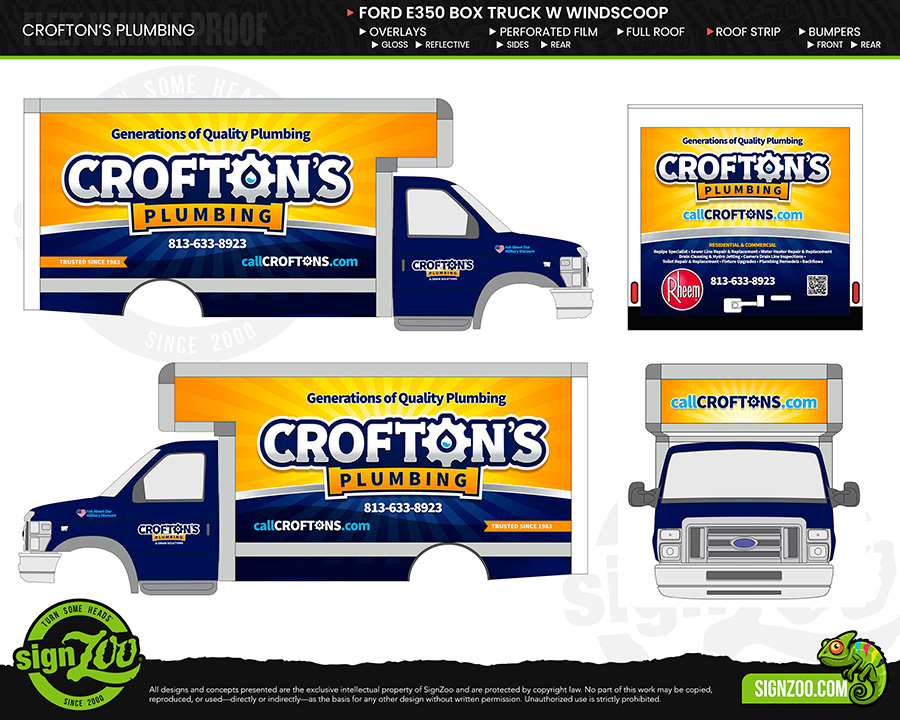
Color isn’t a suggestion—it’s a standard. We maintain physical color records for your brand and send print-accurate proofs produced with the same inks and materials used on your final wraps. What you approve is what hits the road.
Step 3: Choose Coverage With Purpose
Full or partial—pick the tool that fits your goals, budget, and timeline.
Full Wraps
-
Maximum stopping power and brand presence.
-
Protects OEM paint in high-wear zones.
-
Typical install: about one workday per service van (plan for staging time).
Partial Wraps & Decal Systems
-
Faster installs and easier rotations.
-
Great for seasonal promos or service line add-ons.
-
Typical throughput: multiple vehicles per day, depending on coverage and complexity.
We’ll model impact vs. downtime so you choose with eyes wide open.
Step 4: Build a No-Downtime Install Plan
Downtime is expensive. Planning beats it.
Pre-Install Checklist
-
Vehicles washed and dry.
-
Remove old stickers, dealer badges, silicone, and magnetic signs.
-
Empty interiors where installers need access; park in a clean, well-lit area.
-
Confirm keys, contacts, and after-hours access.
Scheduling That Works For Ops
-
Cluster installs by location to cut travel and idle time.
-
Use overnight and weekend windows to keep trucks in service.
-
Mobile teams come to you, or use our regional hubs for multi-day pushes.
-
Stagger drop-offs so vehicles rotate back into service on a predictable cadence.
Step 5: Single-Market vs. Multi-Market Playbooks
Single Market
-
Two-to-three installers on site.
-
Daily handoff: QC → photo documentation → back in service.
Multi-Market / Nationwide
-
Parallel install crews, matched to your density map.
-
Centralized project management, unified standards, local execution.
-
Shared dashboards for real-time progress, issues, and approvals.
Step 6: Quality Control You Can See
-
On-site QC with panel-by-panel checks.
-
Photo logs stored in your account portal for every vehicle.
-
Post-install care guide and first-week follow-up.
-
Service tickets for quick touch-ups if needed.
How Long Will It Take?
Timelines depend on fleet size, coverage, and access windows—but planning accelerates everything.
-
A typical service van full wrap: about one workday per unit.
-
Partial programs and decal kits: multiple vehicles per day, based on scope.
-
Larger fleets move faster with parallel crews and clustered scheduling.
Tell us your service hours and blackout windows—we’ll design a schedule around them.
Tools We Put In Your Corner
-
SignZoo Online Account Login: manage quotes, proofs, orders, and installs in one place.
-
Printed Proofs to Spec: proofs produced on the same inks and materials as final output for true color approval.
-
Physical Color Records: we maintain your swatches and production settings so Year 3 matches Day 1.
-
Fleet Audits: proactive inspections, quick fixes, and planned refreshes to extend lifespan and lower total cost.